The healthcare technology solutions field is rapidly changing with digital tools. This shift is creating a new path for caring for patients and making operations more efficient. According to McKinsey, digital innovations could add between $350-$410 billion to the economy every year by 2025.
The need for medical software development is becoming clearer every day. The market for healthcare software is expected to grow from $3.9 billion in 2024 to $5.44 billion by 2031. This growth, at a rate of 5.68% yearly, shows a huge demand for innovative health IT software. These tools need to meet the needs of healthcare workers and patients alike.
Using digital tools in healthcare is now essential, not just a passing trend. It matches the changing needs of delivering healthcare. Through software development for healthcare sector, providers are improving care and starting a new era in patient service. At this point, the healthcare sector is looking for tech solutions. These should improve care and represent the latest in health innovation.
Key Takeaways
- Digital innovations in healthcare can significantly boost annual revenue by 2025.
- There is a high growth potential for healthcare enterprise software, with substantial market value predicted for 2031.
- Healthcare providers are increasingly investing in digital platforms to enhance service delivery and patient care.
- Medical software development must balance user needs with robust security and compliance measures.
- The advancement towards healthcare technology solutions is central to modernizing healthcare workflows and improving outcomes.
Understanding the Unique Needs of Healthcare Software
The evolution of custom software for the medical industry is fueled by new tech and special demands. These factors shape how healthcare app development progresses. Knowing these needs is key in making solutions that truly help in healthcare work.
Regulatory Compliance and Standards
Meeting strict regulatory standards is a core part of software engineering for healthcare. Laws like HIPAA in the U.S. and GDPR in Europe set high privacy and security standards for patient information. Developers aim to create software that doesn’t just meet these rules but goes beyond them.
User-Centric Design Principles
User-friendly designs are vital for software that serves both doctors and patients. Making sure these tools are easy to use is crucial. It greatly aids their uptake and how well they work in crucial healthcare settings.
Data Security and Privacy Considerations
In healthcare, keeping patient information safe is a top priority. Using strong security measures like multi-factor authentication and encryption is necessary. These protect delicate data in today’s healthcare software.
| Year | Global Healthcare IT Market Value (USD Billion) | Teleconsultation Preference (%) |
|---|---|---|
| 2024 | 760.2 | 74 (millennials) |
| 2030 | 1,834.3 | 55 (general populace) |
Digital solutions are becoming more crucial in healthcare, as shown by the stats. The push for new and secure online healthcare tools keeps growing. As everyone gets more comfortable with these digital options, the focus on creating secure, user-friendly, and compliant healthcare software intensifies.
Key Software Types in the Healthcare Industry
The healthcare industry is getting better with new technology. These technologies are important for improving patients’ care and how things work. Some software really stands out because it makes healthcare much more efficient.
Electronic Health Records (EHR) Systems
EHR systems are key to making healthcare digital. They make managing patient information easier. This helps with giving care and running things smoothly. Healthcare software development shows its value here. These systems let doctors share and see patient info quickly, which means fewer mistakes and happier patients.
This leads to a 25% drop in errors and 30% more satisfaction for patients.
Telemedicine Solutions
Telemedicine is a big deal in digital healthcare. It lets doctors treat patients from far away, which is great for people living in distant places. It helps avoid unnecessary hospital visits and keeps an eye on patients consistently. By 2025, it’s expected to be worth $64 billion in the US, showing it’s really catching on.
Patient Management Platforms
Patient management platforms do a lot, from setting up appointments to handling bills and keeping track of medical records. They are a big part of making healthcare apps, aimed at making things easier and less of a hassle to manage. Improvements like sending automatic reminders to patients and sorting out payments make running a health service smoother and care better.
To wrap it up, growing healthcare software development is changing the healthcare world for the better. EHR systems, telemedicine, and patient management platforms help give care that’s more centered on the patient. This leads to great results for patients and makes healthcare work better.
The Role of Interoperability in Healthcare Software
In our digital age, health IT software, healthcare technology solutions, and medical software development are key. They help provide top-notch patient care. Interoperability in healthcare software lets different systems share data smoothly.
Interoperable systems mark a big shift in health management. They’re vital for better patient outcomes, lower costs, and greater efficiency. This connectedness is a game changer.
Benefits of Data Sharing Across Systems
Interoperable health IT software makes data sharing across platforms easy. It puts patient info into the hands of those who need it. This leads to better decisions, enhancing patient safety and the quality of care. Studies reveal that about 7 in 10 hospital visits benefit greatly from this tech.
Implementing Interoperable Solutions
Setting up interoperable tech involves using standards like FHIR and HL7. These help different IT systems to communicate well. For instance, the CommonWell Health Alliance is a successful model. It covers 34,000 provider sites.
Challenges in Achieving Interoperability
Getting interoperability right is tough due to many different IT systems and standards. Data privacy and integration costs are big hurdles. Plus, having a common data format is tricky but needed for consistent and meaningful data exchange.
We need teamwork among tech firms, healthcare pros, and government agencies to tackle these challenges. This push for unity drives innovation in medical software. As the health tech market grows, expected to hit $549.7 billion by 2028, interoperability’s role will only get bigger. It’s reshaping the future of healthcare.
Emerging Technologies Shaping Healthcare Software
The world of healthcare software development is changing fast. New technologies are making care better and outcomes for patients stronger. They bring great new possibilities to custom software for the medical industry, like better diagnosis, secure data, and ongoing health checks.
Artificial Intelligence in Diagnostics
AI is changing how doctors diagnose illnesses. Accenture says AI could handle 20% of clinical needs, cutting down on needless hospital visits. It might also drop healthcare costs by $150 billion by 2026. These numbers show how AI can lead to more precise and cost-friendly healthcare.
Blockchain for Secure Patient Records
Blockchain makes patient records way more secure. By spreading out data storage, it lessens the chance of data theft. This tech step forward in healthcare technology solutions means safer records and more trustworthy health info.
Internet of Things (IoT) in Patient Monitoring
IoT is revamping patient care. Devices talk directly to doctors, sending health updates instantly. By 2025, IoT could bring in $135 billion for healthcare, making it more and more vital.
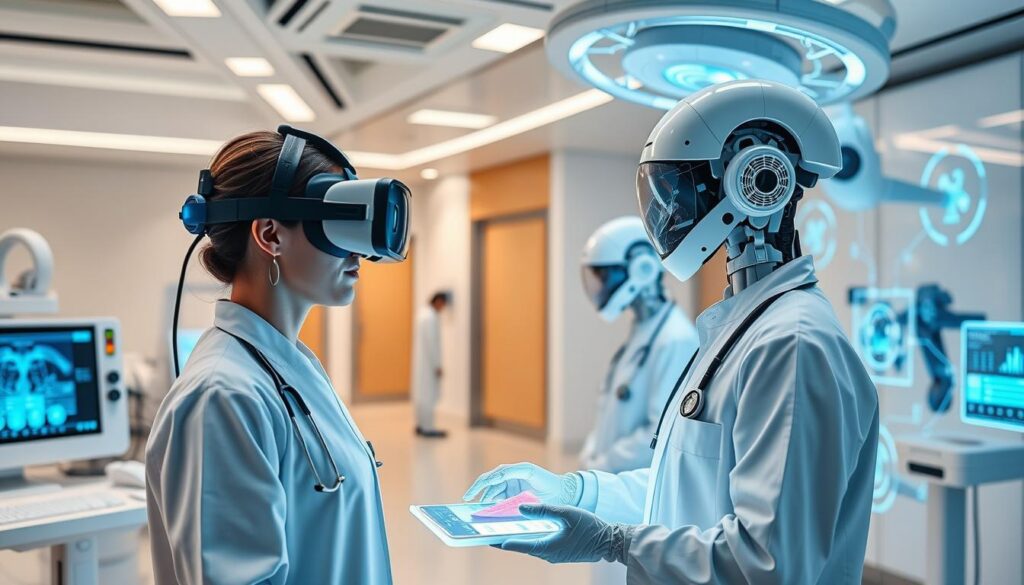
Bringing these high-tech solutions into healthcare is key. They’re making the medical field better for doctors and patients alike. With these tools, healthcare is becoming even more advanced and patient-focused.
| Technology | Potential Impact | Market Prediction |
|---|---|---|
| AI in Diagnostics | Reduction in unnecessary hospital visits | $150 billion savings by 2026 |
| Blockchain in Record-Keeping | Enhanced data security and patient trust | Integral to future regulatory compliance |
| IoT for Patient Monitoring | Real-time health tracking and proactive treatment | Revenue increase to $135 billion by 2025 |
Software Development Lifecycle in Healthcare
The software development lifecycle in healthcare is very orderly. It makes sure the software is of high quality, fits the rules, and works well. This process is key to success, especially in healthcare. Here, patient safety and keeping data safe are very important.
Planning and Requirements Gathering
Starting with good planning is important in healthcare software development. During this stage, we find out what everyone involved needs and what the rules are. The plan has to match the needs of clinical workflows and follow privacy laws like HIPAA and GDPR.
Development and Testing Best Practices
The development phase focuses on making software that meets its goals and follows medical software best practices. It uses clinical coding standards like SNOMED-CT and LOINC. Also, strict testing ensures the software is safe, works well, and is easy to use. This is crucial for patient health.
Deployment and Maintenance Strategies
After creating the software, it’s put into use and then kept up to date. This ensures it works well with systems like EHRs and stays useful over time. Good maintenance keeps the software current with medical practices and rules. It’s important for the software to be reliable and easy to update.
This whole lifecycle makes sure the software starts strong and can keep up with changes in healthcare. It helps patients get better care and makes operations more efficient.
Real-World Case Studies in Healthcare Software Development
In healthcare, health IT software has made big strides in improving how we care for patients. Looking at real examples from various areas shows how key digital solutions for healthcare are. It also points out the new ideas from complex software engineering for healthcare.
Successful EHR Implementations
Electronic Health Records (EHR) are changing healthcare for the better. A leading US healthcare provider cut down on admin tasks by using a top-notch EHR system. This system was built for high performance and to meet tough rules. It helps save money, makes patient care better, and keeps data precise.
Innovations in Telehealth Services
Telehealth has made getting medical help easier, especially during the pandemic. It’s been a game changer in places far from hospitals. There’s a platform that lets patients talk to doctors instantly, without going to the clinic. This helps in diagnosing and treating patients from afar.
Patient Engagement Tools and Their Impact
Tools that engage patients are moving healthcare to focus more on the patient. These tools let patients see their health records, learn more, and talk to doctors easily. We see the results of smart software in healthcare through platforms offering personal touches and fun to use features. They help patients take charge of their health.
These stories show how custom healthcare software solutions can really make a difference. They make services better, easier to get to, and centered around the user.

| Challenge | Software Solution | Outcome |
|---|---|---|
| High administrative costs and inefficiencies | Custom EHR system | Reduced administrative spending by up to 30% |
| Limited access to healthcare in remote areas | Advanced telehealth platform | Expanded healthcare access and reduced need for travel |
| Patient disengagement and lack of accessible data | Interactive patient engagement tools | Improved health outcomes and patient satisfaction |
To learn more about how custom software development can drive growth in healthcare, check out this detailed guide on successful software solutions.
Future Trends in Healthcare Software Development
The healthcare industry is changing fast, especially in software development. There are many new innovations coming soon. These changes could greatly increase the healthcare sector’s value. McKinsey predicts a huge boost of $350-$410 billion every year by 2025 thanks to these innovations. This shows how custom software is very important for growing the medical industry.
Advancements in Personal Health Technologies
Health tech like wearables and apps are giving patients more control than ever. These tools help patients keep an eye on their health data. They also let doctors give care that fits each person better. The market for healthcare software is creating easier and more personal solutions. This meets the need for better care. The healthcare software market is expected to grow. It should increase by 5.68% yearly from 2024 to 2031.
The Growing Importance of Cybersecurity
Now, over 90% of hospitals use EMR and EHR systems. This makes cybersecurity very important. Healthcare technologies are improving their security. They use strong firewalls and multi-factor authentication. Cloud computing is also more important. It keeps patient data safe and follows HIPAA laws. It also helps stop data breaches. These steps are crucial for developing healthcare software.
Potential Impact of Regulatory Changes on Development
The healthcare software world must keep up with new rules. For instance, telemedicine is growing fast. But, new laws could change how it works. Developers need to be ready for these changes. They must update their software quickly to keep it working well. The growth of software markets, like the EHR market’s growth of 12.91% from 2022 to 2027, depends on this flexibility. People in healthcare software need to watch for new rules. This helps them contribute to the big market growth expected by 2032, reaching $981.5 billion.
FAQ
What are the primary considerations for software development in the healthcare sector?
For healthcare software, it’s vital to follow rules like HIPAA. Designs must focus on the needs of users. Keeping health data safe and private is also a must.
How does healthcare app development address regulatory compliance and standards?
Development needs to match strict rules to keep data safe. This means following laws like HIPAA. HIPAA helps safeguard personal health information.
Why are user-centric design principles critical in medical software development?
Designs that focus on users make healthcare tech easy and efficient to use. This improves satisfaction and the rate at which people start using the technology.
What roles do Electronic Health Records and Telemedicine play in healthcare technology solutions?
EHR systems make managing patient data easier. Telemedicine lets doctors consult patients remotely. Both are key in improving healthcare quality and outcomes for patients.
What is the importance of interoperability in health IT software?
Sharing data smoothly between different systems is key for good care. It helps doctors see a complete view of patient information. This leads to better decisions and health outcomes.
How is artificial intelligence impacting healthcare app development?
AI helps diagnose patients faster and more accurately. It’s also used in making medicine more personal. AI makes healthcare apps more effective.
What are the challenges in achieving interoperability in medical software development?
The main issues are making data formats match, ensuring systems work together, and keeping up with laws. Solving these problems is vital for better care and efficiency.
What emerging technologies are shaping the future of healthcare software development?
Blockchain secures health data transactions. IoT tracks patient health continuously. AI improves diagnosing. These lead the changes in developing healthcare software and care.
What is involved in the software development lifecycle for custom software in the medical industry?
This cycle includes planning, finding out healthcare needs, development, testing, and deployment. Continuous upkeep ensures the software keeps working well over time.
How do real-world case studies in digital solutions for healthcare inform future development?
Case studies show the direct benefits like better coordination from EHR, more access via telehealth, and improved health management. They inspire new innovations.
What future trends should stakeholders consider in healthcare app development?
Trends to watch include more personal health tech, the growing need for strong cybersecurity, and how new laws might change development ways.