
The digital world loves games more than ever now. Software development for the gaming industry is booming. Game software engineers mix art and top-notch technology. They make awesome virtual worlds. These experts are skilled in coding with C++ and Java. They also fix and improve gaming software. Their work is key to making games that amaze us. Game development services are always changing. The industry wants people who can make new, fun experiences in gaming app development.
Key Takeaways
- The gaming industry values a strong educational foundation, often requiring a bachelor’s degree in computer science or a related field.
- Competitive salaries in the gaming software engineering discipline reflect the high demand for specialized skills.
- With positive job prospects buoyed by VR and AR technologies, the industry promises growth and innovation.
- Unity and Unreal Engine dominate as top tools for professionals in gaming software development.
- Real-world experience through internships is pivotal for breaking into the field of gaming software engineering.
- AI, cloud gaming, and real-time ray tracing are at the forefront of driving the industry’s future.
Overview of Software Development in the Gaming Industry
Gaming software development is vital for immersive experiences in games. Today, as digital realms grow, this development is key in the gaming industry. It allows for unique, interactive worlds that attract many people. This mix of technology and fun creates a special space.
Game programming is more than writing code. It involves combining complex mechanics with creative content. Developers work to make games that respond smoothly in real-time. This makes the field both exciting and tough.
The Importance of Software Development
The gaming industry, worth billions, thrives on software development. Software is central to everything in gaming, from simple functions to complex games. Trends like virtual reality and cloud gaming make developers strive for better solutions.
Key Technologies Used
- Unreal Engine: Dominating with a preference of 51% in the Media and Entertainment industry, it’s renowned for high-fidelity graphics.
- Helix Core: Leading the charge in version control, pivotal for collaborative game development environments.
- Godot: Growing in popularity especially in North America and among indie developers, appealing for its open-source nature.
Trends Shaping the Future
The gaming industry is evolving at a remarkable pace, driven by technological advancements and growing market demands.
VR gaming could be worth $45.09 billion by 2027. This shows how game software development has big opportunities. AI in gaming is also growing, expected to reach $10.9 billion by 2025. These advancements suggest a future with smarter, more adaptive games. They offer both challenges and opportunities for developers.
Types of Games Developed
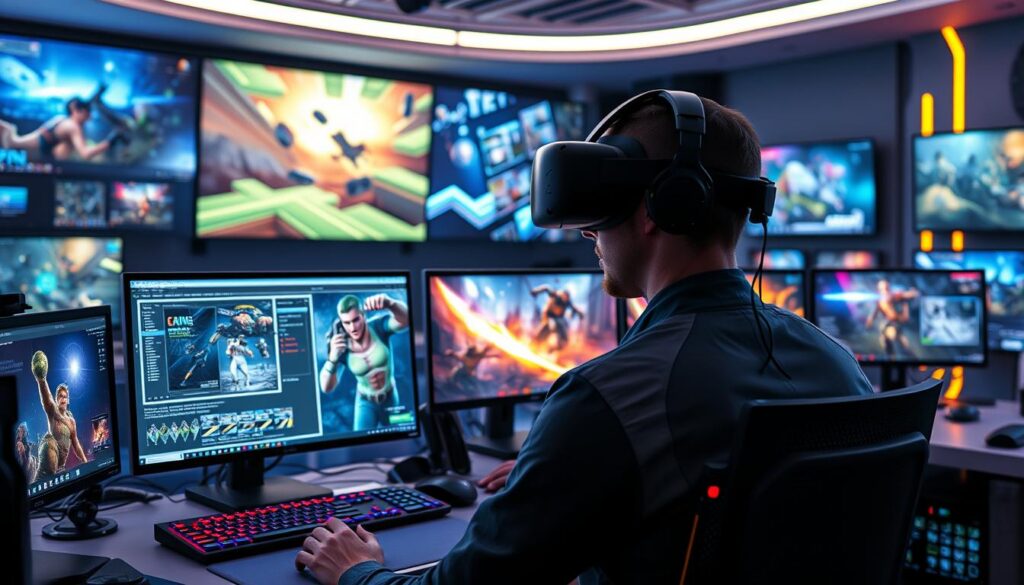
The world of game design has grown a lot, bringing us many game types. These games are made for different devices like phones, gaming consoles, or computers. Each type needs its own software to make the games more fun and work better.
Mobile Game Development
Mobile games are a big deal because they’re easy to get into and lots of people play them. They make up about 45% of the gaming market. Soon, more than half of everyone around the world will play games on their phones. These games are getting better, with things like cloud gaming that lets you play across different devices.
More than half of mobile games are made with Unity. This shows how important this software is for making all kinds of mobile games.
Console Game Development
Xbox and Playstation are big names in gaming. They offer amazing graphics and deep stories in their games. Now, cloud gaming is changing how we think about console games. It lets you play games on any device, not just consoles.
But, even with new tech, consoles still focus on games with great graphics and stories that pull you in.
PC Game Development
PCs are very powerful for gaming. They can handle detailed graphics and big game worlds. By the end of 2022, nearly 1.8 billion people were playing games on PCs. This shows how much people love PC gaming.
PC games are always getting better, thanks to new tech like quantum computing. This could make games look better and more unpredictable as you play.
| Platform | Key Software/Engine Used | Developer Base |
|---|---|---|
| Mobile | Unity | Over 50% of mobile games |
| Console | Unreal Engine | 7.5 million developers |
| PC | Autodesk, Unreal Engine | Significant use in over 90% of game studios |
The Software Development Lifecycle in Gaming
The gaming industry’s software development lifecycle is a journey through key phases. Each phase is crucial to creating top-notch gaming software. This process not only drives innovation but also meets the gaming industry’s strict demands.
Concept and Planning Stage
The first step of making a game is its concept and planning stage. This is where creativity and strategy come together. During this stage, developers make prototypes to test basic game mechanics. This phase sets the game’s direction and takes up about 20% of the project’s timeline.
Design and Development Phase
Next comes the design and development phase. Here, original ideas become real through advanced programming and art design. This is the longest and toughest part, covering coding, graphic design, and first tests. Developers use special software to create detailed, fun gaming worlds.
Testing and Deployment
After design and development, the game moves to testing. At this phase, quality assurance teams are crucial. They catch and fix about 90% of bugs, ensuring the game works well on all platforms. Deployment includes releasing the game and providing ongoing support, like bug fixes and new content.
This lifecycle is critical for a game’s success. It ranges from planning to post-release support. Every stage plays a unique role, with teamwork at its core. This organized method doesn’t just assure quality but also drives the gaming market’s growth, aiming to hit $113.3 billion.
Game Engines: Choosing the Right One
Choosing the best game engine is key in game engine development. These engines offer the backbone for creating game mechanics and help integrate striking visuals with interactive elements. Making the right choice is crucial for software solutions for the gaming industry.
Popular Game Engines Overview
In the gaming world, some engines stand out for indie and big game projects. Unity and Unreal Engine lead in 3D games. Game Maker Studio 2 and Defold excel in creating 2D games.
Key Statistics:
- Unity has 45% of the game development market, popular for its flexibility and user-friendliness.
- Unreal Engine, with 17% market share, is known for high-end graphics and a strong multiplayer setup.
Game Maker Studio 2 and Defold are great for 2D game developers. They are powerful and easy to use.
Evaluating Game Engine Features
Evaluating a game engine’s features is important. Developers should look at language support, handling of assets, and script ease. Unity and Unreal offer great documentation and community support. This helps with problems and learning new features. Different engines meet different needs, from 3D design to mobile games.
For instance:
- Unity uses C#, known for its productivity and ease of use.
- Unreal Engine lets developers use C++ for top-notch graphics and console games.
- Godot provides GDScript, a language like Python made for better game making.
These different features mean developers can pick the best platform for their project and skills in gaming software development.
Cost Considerations
Cost matters when choosing a game engine. Many leading engines are free to start but their full licenses can be costly. This affects your game’s budget. For example:
- Unreal Engine is free at first but takes a revenue share after reaching sales milestones.
- Defold is entirely free, aiming at indie developers and small teams.
The engine you choose can also impact costs for game maintenance and updates. It’s wise to pick an engine that scales well and has strong community support. This ensures your game remains up to date and cost-effective for software solutions for the gaming industry.
The best game engine is more than a choice. It’s a partner in bringing your game ideas to life. It assures both technical success and financial sense for developers in the lively gaming software development scene.
Skills and Expertise Required
The gaming world is growing fast. This means more experts in gaming app and software development are needed. They combine creativity with technical knowledge. This includes programming, project management, and art skills.
Programming Languages and Tools
To make great gaming software, knowing languages like C++, Java, and C# is key. Developers should also learn about engines such as Unity and Unreal Engine. These tools help create fun games. Using C# and Blueprints helps developers make games more interactive.
Graphic Design and Animation Skills
Good visuals are crucial for a game’s success. Knowing how to use design software is very important. Using Blender or Maya for 3D modeling makes games feel real. Art skills are as necessary as technical ones for engaging players.
Project Management in Game Development
Managing game development projects well is important. Project managers work to keep teams on schedule. This can take three to five years for most games. They also handle resources for all development stages. This includes sound design, which is a big part of the game’s impact.
Challenges Facing Software Developers
In gaming app development, developers face many technical and market challenges. They must overcome these to keep innovating and engaging users. These challenges are crucial in making software solutions for the gaming industry better.
Technical Hurdles
Creating games combines creativity with technical skills. Developers work with engines like Unreal & Unity, which need strong coding and design knowledge. These tools offer lots, but are complex to use.
Building a unique game engine can take years. This is hard with technology changing fast. It makes creating games a long and tough process.

Market Competition
The gaming market is very competitive. Developers strive to stand out with Freemium models and in-app ads. They also need to match game genres with designs perfectly. This link is crucial for keeping players happy and loyal.
It’s vital to adjust to what players want. Failing to do so can lower player satisfaction and retention. You can learn more about this by visiting optimizing game development processes.
Player Engagement
Successful game programming needs high player engagement. This means coming up with new gameplay ideas and listening to user feedback. Finding ways to make money without hurting game quality is key.
Games like Diablo Immortal show the risk of too many microtransactions. They can make players unhappy. Developers must address these issues well to keep and grow their user base. This shows how important responsive software solutions for the gaming industry are.
Future Outlook for Gaming Software Development
The future of gaming software development looks exciting. It’s filled with new tech that changes how we experience games. Cloud gaming, artificial intelligence (AI), and machine learning are leading the way. They are more than just upgrades. They’re changing gaming into a mix of art, fun, and tech excellence.
Emerging Technologies in Gaming
The digital age has seen the gaming industry grow fast. In 2023, global revenues hit $183.9 million. VR and AR, worth $11.5 billion, promise more immersive games like Pokémon Go. Companies like Meta and Apple are investing a lot in these areas. As players get older, the demand for deeper experiences that use new tech increases.
Shift Toward Cloud Gaming
Cloud gaming is becoming more popular. It makes playing advanced games easier for everyone. The U.S., with nearly 40% of the world’s game developers, is leading this change. This approach is boosting multiplayer games. With a 47.8% growth expected by 2029, cloud gaming will reach new heights of success and creativity.
The Rise of AI and Machine Learning
AI and machine learning are transforming gaming. They’re used in creating game characters and even entire levels, like in No Man’s Sky. AI helps make game design smarter and more creative. In places like California, where many game developers work, AI and gaming are merging. This means we’ll see games that go beyond what we’ve imagined before.
FAQ
What is the role of software development in the gaming industry?
In the gaming world, software development is key. It helps make games engaging and fun. This work includes designing, programming, testing, and updating games. Developers use different tech to match what gamers want and follow top standards.
What technologies are pivotal for modern gaming software development?
Today’s gaming relies on several tech tools. Game engines like Unity and Unreal Engine are vital. So are programming languages such as C++, Java, and C#. Plus, there’s AI, VR, AR, cloud computing, and tools for making games that work on different platforms.
How are emerging trends influencing the future of gaming software development?
New trends are changing the game development scene. They bring in AI and machine learning and push for games that feel more personal and interactive. There’s also a big move towards cloud gaming. Plus, making games that work across various platforms is key to reaching more players.
What different types of games require dedicated software development services?
The game world is vast, covering many platforms. Each one needs its own type of software development. This includes making apps for mobile games, brewing console games, and crafting games for PCs. Each area demands unique technical skills and creative thinking.
What are the key stages of the software development lifecycle in gaming?
Making a game goes through several important phases. First, there’s the concept and planning. That’s where ideas get shaped. Next comes design and development, where the actual programming and creation of the game happen. Finally, there’s testing and deployment. This makes sure the game works great on all platforms.
How do game developers choose the right game engine?
Picking a game engine is a big deal for developers. They look at what features and tools each one offers. They also consider how well it fits the game’s needs, its cost, how easy it is to use, and if there’s good community support. All this helps them pick the best engine for their game.
What are the essential skills required for gaming software development?
Gaming developers need a strong set of skills. They must know programming languages well and be able to use game development tools. Familiarity with graphics, design, and animation is crucial. They also need to be good at managing projects to ensure games are done on time and well.
What challenges do software developers face in the competitive gaming industry?
Developers face many hurdles. They need solid problem-solving skills to tackle technical issues. Standing out in a crowded market means they must program games that grab attention. And they work hard to make games that keep players coming back through great design and smooth play.
What is the impact of emerging technologies on gaming software development?
New tech like cloud gaming, AI, and machine learning is a game changer. It makes games more interactive and adapts to how players act. This tech also lets people play games on many devices. And it makes creating games faster and smarter by using data wisely.
How is the shift toward cloud gaming affecting the industry?
Moving to cloud gaming is a big trend. It lets people play games without fancy equipment. This opens up gaming to more people. But it also means developers have to think about new tech needs and how to keep games running smoothly over the internet.
How will AI and machine learning shape the future of games?
AI and machine learning will make huge changes in gaming. They’ll create game worlds that change and react in new ways. They’ll make games more tailored to what each player likes. And they’ll make making games faster by automating tasks and analyzing lots of data.