
Today, artificial intelligence sales optimization is changing the game in digital marketing. Over 250 million people used AI in 2023, showing its wide reach. Businesses that use AI-driven sales conversion optimization tools see big benefits. They save about 6.4 hours a week by using AI for tasks that rely on data. This is because AI can analyze data and learn from it very efficiently.
Companies in various sectors are seeing real benefits. For example, Netflix and Cadbury have both succeeded with AI. Netflix keeps viewers hooked with AI that suggests what to watch. Cadbury, in India, used AI in a campaign and saw a 65% jump in how many people followed links. They also had a 33.6% increase in sales. These successes show how AI is becoming essential in reaching and selling to customers.
Tools like Unbounce’s Smart Traffic show how automated sales conversion strategies can be very effective. These tools use past sales data to make future marketing better. With AI, the process of improving sales (CRO) gets a big lift. This leads to marketing that connects more deeply with people.
Key Takeaways
- AI-driven solutions streamline the process of sales conversion optimization.
- AI not only saves time but also enhances the precision of targeting and personalization.
- Success stories across industries demonstrate AI’s powerful impact on conversion rates.
- Automated strategies informed by AI yield continuous learning for sustained campaign improvement.
- Businesses implementing AI-driven tools are better equipped to predict and meet customer needs in real-time.
Understanding AI-Driven Sales Conversion Optimization
The digital world is changing fast, and AI leads this change. It’s changing how businesses draw in and win over customers. By using machine learning and data analysis, AI helps to better understand and predict customer behavior. This kind of targeting and customization increases customer interaction. It turns simple website visits into real sales.
Definition and Importance
This kind of optimization uses AI to improve sales. It makes the customer journey better and speeds up conversions. AI looks at a lot of user data to spot what needs change. This makes sales funnels work better.
Studies show that using AI can double conversion rates. This is a strong reason to use tech in sales. Many businesses, from shops to tech, see better customer reactions and more profit when they use AI.
How AI Transforms Sales Strategies
AI changes sales by rethinking how to make sales funnels better. It uses algorithms to see user behavior patterns. These are not always easy to see but can predict future sales. This lets businesses offer content that really fits what people want, making sales more likely.
- Dynamic Content Adaptation: AI tools automatically update landing page content based on what users like, making interactions better and more likely to lead to sales.
- Predictive Lead Scoring: AI guesses how likely leads are to buy, focusing sales on the best prospects.
- Enhanced A/B Testing: AI helps businesses test different sales strategies quickly to find what works best.
In AI’s world, every update relies on data, making every new strategy better than the last. For instance, businesses using AI in email marketing have seen a big jump in conversion rates, up to 94%. Also, AI like chatbots has done as well as or better than humans in talking to customers. This shows how good they are at improving customer happiness and making sales more likely.
Key Components of AI Sales Optimization
The path to data-driven sales optimization is filled with cutting-edge technologies. These change the way companies shape their sales strategies. By using these components, firms can boost their conversion rates and get better sales results.
Data Analytics Technologies
Data analytics technologies are key to AI sales strategies. They collect and analyze heaps of data, from clicks to time spent browsing, and complex behavior patterns. This analysis helps understand customer-brand interactions across different points. For example, companies like DevriX and Amazon use these tools to fine-tune recommendations and interactions in real-time. This leads to better engagement and more conversions.
Machine Learning Applications
Machine learning shows AI’s power not just to gather insights but also to predict trends. These applications update themselves with new data patterns, enhancing optimization tools for higher sales conversion rates. Red Roof Inn, for instance, boosted bookings by targeting customers with canceled flights with AI. Similarly, Uber and Spotify tweak their services based on user demand and preferences. This shows that staying adaptable is crucial for staying ahead.
Predictive Modeling Techniques
Predictive modeling uses past behaviors to predict future actions. This lets companies fine-tune their marketing. For example, banking apps give personalized advice by analyzing transactions, while Amazon optimizes product suggestions for better engagement and sales. Using these techniques helps in better planning and aligning with customer needs, boosting sales performance.
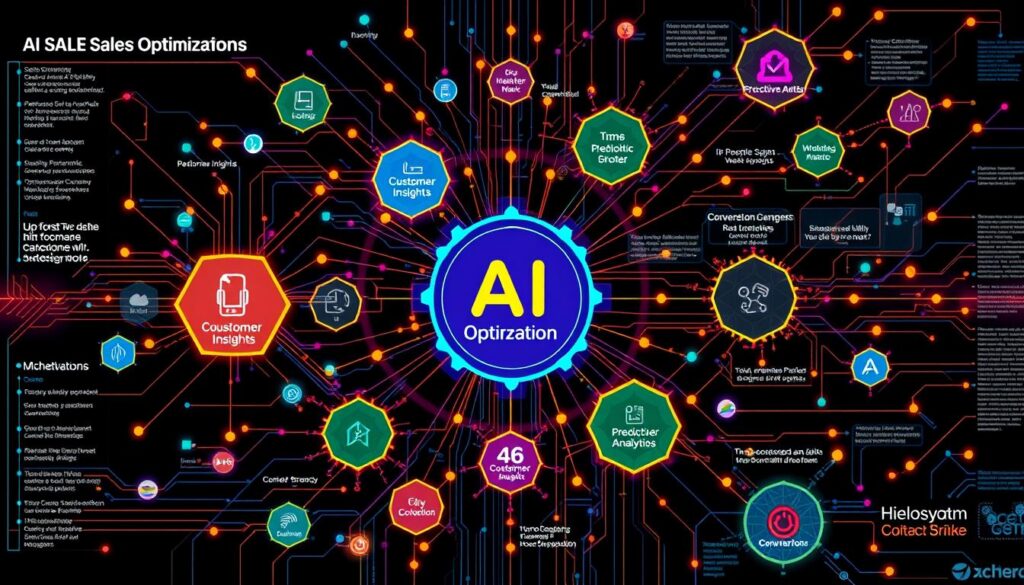
In conclusion, the combination of data analytics, machine learning, and predictive modeling not only powers up sales teams but also offers a more tailored shopping experience for customers. As these technologies evolve, AI’s role in sales will only get bigger. This opens new paths for sales conversion optimization and business achievements.
Benefits of Implementing AI in Sales Processes
AI in sales makes operations smoother and boosts the ability to connect with customers. AI-driven sales conversion optimization elevates various aspects of business, from work speed to understanding customer needs better.
Increased Efficiency and Productivity
AI tools let companies automate tasks like entering data and nurturing leads. This lets salespeople focus more on making sales and building relationships. Automation drives automated sales conversion strategies and is key to a 11.4% yearly growth in AI sales software until 2032. It makes the sales process quicker and more productive on a large scale.
Enhanced Customer Insights
AI changes how businesses see and interact with customers by analyzing complex data. AI algorithms dig into behavior data for precise, useful insights. These insights help create personal customer interactions and marketing, increasing loyalty. For more on AI and sales insights, read about how AI tools help in understanding customers.
Improved Sales Forecasting
AI with predictive analytics for sales conversion is great for predicting sales trends. It looks at past and present data to foresee market trends. This helps businesses match their inventory and plans with what customers will want. Accurate forecasting ensures the right amount of stock, avoids overproduction, and uses resources well. This is essential for improving sales efficiency.
Case Studies: Successful AI Integration in Sales
We explore ai-driven sales conversion optimization across varied industries. They have enhanced their sales and outcomes by using AI. Through case studies, we see the big impact of AI on improving sales in different areas.
Industries Leveraging AI for Sales
Many sectors, including healthcare and e-commerce, are quickly using AI to better their sales methods. Netflix, for example, uses AI to personalize what users see. This results in more user engagement because of content that matches their tastes. This strategy has helped maintain their subscriber count. Also, in e-commerce, giants like Amazon and Walmart use AI to improve how they deliver items and handle customer service. They meet customer needs well, which has grown their businesses.
Measurable Outcomes and Success Stories
Cadbury’s use of ai-driven sales conversion optimization through personalized video ads is notable. This method saw a 65% jump in the number of people clicking on their ads. Additionally, their sales went up by 33.6%, showing the power of content made just for the consumer.
Automotive and retail sectors have reported positive results from using AI too. For instance, BMW and Toyota have used predictive AI to better plan maintenance. This has made customers trust and rely on them more. Retailers like H&M and Sephora have used AI for stock control and to create shopping experiences that really speak to the customer. This has increased their sales and kept customers coming back.
| Company | AI Application | Result |
|---|---|---|
| Netflix | Personalized Recommendations | 80% reduction in churn |
| Sephora | Virtual Artist Tool | 20% increase in online sales |
| Toyota | Predictive Maintenance | 40% reduction in breakdowns |
| Walmart | AI-Driven Inventory Management | 20% increase in customer satisfaction |
These case studies show the strength of ai-driven sales conversion optimization. They stress the importance of staying competitive in today’s business world. These stories tell us that incorporating AI in sales is more than just making things automatic. It’s about making the customer’s experience better. This leads to more sales and loyalty.
Tools and Technologies for AI Sales Optimization
Today, using AI to boost sales strategies is crucial. Knowing about the different tools and technologies helps businesses improve their sales. In this article, we look at some key platforms and how they work with business systems to enhance results.
Leading Platforms and Software
There are many advanced platforms that use AI to make sales efforts more effective. For example, Unbounce’s Smart Traffic, Intelligems, and Shopify automate A/B testing and make customer interactions personal. By doing this, they adjust content for each visitor and respond to their actions in real time. This increases the chances of making a sale.
Integration with Existing Systems
AI tools for sales are scalable and flexible, making them easy to merge with current business setups. The aim is to blend machine accuracy with human insight. These technologies improve CRM systems by offering insights into customer behavior and making sales pipeline management smoother. This is done without disturbing current workflows.
| Platform | G2 Rating | Starting Price | Features |
|---|---|---|---|
| HubSpot Sales Hub | 4.4/5 (11,000+ reviews) | $18/month | Comprehensive CRM solutions, email tracking, sales automation |
| Scratchpad | 4.8/5 (1,400+ reviews) | $19/user/month | Unified workspace for sales, instant data access, and updates |
| Salesforce Sales Cloud | 4.3/5 (18,700+ reviews) | $25/month | Extensive ecosystem, customizable reports, AI analytics |
| Gong | 4.7/5 (5,500+ reviews) | Pricing upon request | Conversation intelligence, deal insights, revenue intelligence |
| Qualified | 4.9/5 (950+ reviews) | $3,500/month | Real-time website visitor analytics, personalized interactions |
Using these platforms makes sales operations more streamlined and quick to adapt to market changes. By adding advanced AI tools to their sales activities, companies manage their pipelines better. This leads to more sales and revenue growth.
Challenges in Adopting AI for Sales
Companies see a lot of potential in automated sales enhancers. But, starting with AI technologies comes with challenges. These include high start-up costs and a general resistance to new methods. Also, there’s often a limited understanding of what AI can really do.
Common Barriers to Implementation
Putting AI into sales settings is tough. High costs and resistance inside companies are big hurdles. Plus, there’s usually not enough knowledge about how AI works. This makes things slower.
Studies show that half of the top sales and marketing leaders use AI. Yet, it’s not everywhere yet. The worry that AI may take over jobs adds to the hesitation. But AI actually helps by doing routine tasks and making decisions based on data.
Strategies to Overcome Challenges
To beat these obstacles, teaching teams about tech is key. Companies need a plan that shows how AI will pay off eventually. Experts in AI and automation suggest starting small. Beginning with test projects can prove AI’s worth and make adding it in fully easier. Teams that have used AI saw their leads grow by half.
It’s also important to keep humans in the loop for some tasks. Like, AI is great at sorting data and ranking leads. But people are still the best at making complex deals and growing customer relationships.

Future Trends in AI-Driven Sales Conversion Optimization
The AI-driven sales conversion field is changing due to fast technological progress. Industry leaders focus on advanced machine learning, natural language processing, and better predictive analytics. Emerging technologies in sales optimization are not just trends; they’re fundamental for the next big step in understanding and influencing what customers do. The keys to success now include making decisions automatically and tailoring sales approaches to each customer.
Emerging Technologies to Watch
Traditional CRO methods have big limitations, like not being scalable and only offering limited optimization. Now, businesses are turning to AI to find patterns and trends they couldn’t see before. For instance, AI personalization can boost visitor conversions by over 180%. Amazon uses an AI to recommend products during the buying process, making up to 35% of their sales. Similarly, Hannah & amp; Henry enhanced their product pages with AI. This led to a whopping 45.67% increase in revenue. These cases show AI’s big role in making sales efforts more efficient, keeping customers engaged, and increasing profits.
Predictions for AI’s Impact on Sales
Experts think AI will play an even bigger part in sales very soon. As companies spend more on AI, their goals are to convert more sales, keep customers longer, and get ahead of rivals. Google Analytics and Adobe Analytics are already popular for observing user actions and important metrics. With organizations like Salesforce and HubSpot benefiting from AI with better sales efficiency and higher conversion rates—Salesforce improved sales efficiency by 20% and HubSpot got 94% better email campaign conversions—these predictions for artificial intelligence sales optimization are quickly becoming reality. As AI boosts chats, personalized emails, and suggestions for customers, all types of businesses will see AI as a must-have in their sales strategies.
FAQ
What is AI-Driven Sales Conversion Optimization?
AI-driven sales conversion optimization uses artificial intelligence to turn more website visitors into customers. It applies machine learning, data analytics, and predictive modeling. These help in understanding user behavior and boosting conversion rates.
Why is AI-Driven Sales Conversion Optimization important?
It’s key for crafting effective marketing and user experiences. By deeply understanding the audience and using real-time data, businesses see better conversion rates. This leads to using budgets more wisely.
How does AI transform traditional sales strategies?
AI changes sales strategies by using data analytics and predicting future behaviors. It helps make marketing and sales more effective. This means businesses can attract and capture leads more efficiently.
What technologies are involved in AI sales optimization?
Technologies include data analytics for tracking user actions, machine learning for spotting trends, and predictive modeling for future planning. These tools help adapt sales strategies based on customer behavior.
What are machine learning applications in sales?
Machine learning in sales examines customer data, adjusts to trends, and betters sales strategies. It personalizes user experiences without needing much human guidance.
How do predictive modeling techniques help in sales optimization?
Predictive modeling predicts customer behaviors by using past data. This lets sales teams prepare better. They create targeted campaigns that result in more sales.
What efficiency gains are provided by implementing AI in sales processes?
Using AI in sales saves time by automating regular tasks. This allows sales people to focus more on big-picture goals. Overall work productivity improves.
How does AI provide enhanced customer insights for businesses?
AI analytics give deeper looks into customer habits and preferences. This leads to personalized services that boost sales and customer loyalty.
What improvements in sales forecasting does AI offer?
AI improves sales forecasting by analyzing past and current data. This helps businesses plan better, manage inventory well, and satisfy customer needs.
Which industries have successfully integrated AI in their sales processes?
Many sectors like e-commerce and consumer goods use AI in sales. Netflix and Cadbury are examples. They’ve seen better engagement and conversions through AI.
What are some leading platforms for AI sales optimization?
Top AI sales tools include Unbounce’s Smart Traffic and Shopify. They help with content personalization and A/B testing, making sales more effective.
Can AI optimization tools integrate with existing business systems?
Yes, AI tools can easily fit into current systems. They work well, offering businesses the chance to improve their sales tactics with AI.
What are common challenges when adopting AI for sales?
Adopting AI can be tough due to costs, resistance to change, and a lack of AI knowledge. These factors can slow down its use.
How can businesses overcome the challenges of implementing AI in sales?
To tackle challenges, businesses should educate their teams about AI. Planning clear AI adoption paths and starting small projects can also help a lot.
What emerging technologies are shaping the future of AI in sales?
New machine learning, natural language processing, and analytics are changing AI in sales. They’ll offer deeper insights and better personalization.
What are the predictions for AI in the future of sales?
AI is expected to grow in sales, with more companies investing. They aim to improve customer value and stay ahead in the market.