The entertainment industry is changing fast, thanks to AI-driven interactive entertainment. At the core of this change is the ai agent for entertainment industry. This tool isn’t just changing how we engage with media. It’s making the entertainment sector more efficient, quick to respond, and competitive. From creating personalized content to using automated entertainment solutions for making new content, AI agents bring new levels of excitement and innovation.
Leading these changes are AI-powered recommendation systems. They greatly improve how we find new content and experiences. These systems do more than just give suggestions. They use predictive analytics and virtual assistants to help the industry grow and connect more deeply with audiences. As a key part of AI-driven growth, AI agents boost efficiency and make sure entertainment is more memorable and unique.
Key Takeaways
- AI agents are central to the digital transformation of the entertainment landscape, offering elevated personalization and interactivity.
- Automated processes ushered in by AI improve operational efficiency and enable a competitive edge for industry players.
- The deployment of AI in entertainment spans various facets, including content recommendations, creation, and predictive analytics.
- Creative synergy between AI technology and entertainment professionals is driving innovation and raising the quality bar.
- The integration of AI agents into entertainment is a step toward a future of immersive, tailored, and interactive user experiences.
Overview of AI in the Entertainment Industry
AI technology for entertainment is changing the game. It’s making how we create, share, and enjoy content different. With the rise of the digital age, having artificial intelligence in entertainment is crucial. It helps businesses use technology to keep audiences interested and makes making content smoother.
The Evolution of AI Technology
The journey of AI technology has been remarkable. It started with basic algorithms. Now, it has grown to entertainment industry virtual assistants. These assistants help with complex choices and creative tasks.
Current Trends and Applications
AI is being used in many ways in entertainment. It helps make viewing experiences personal. For example, Disney Plus uses AI to suggest shows and movies based on what you like. This makes people enjoy their service more.
- AI-powered NPCs in gaming create deeper immersive experiences.
- Voice recognition technologies in mobile apps make using them easier without using hands.
- AI-driven analysis tools help fine-tune marketing approaches and connect better with audiences.
Case Studies in AI Implementation
Looking at AI technology for entertainment shows its big impact. Disney Plus uses AI not just for suggestions. They also analyze what viewers like to plan what to show next. This keeps viewers happy and coming back for more.
“AI in media and entertainment is not just enhancing how we interact with content, but also how content interacts with us.”
On a bigger picture, AI in media and entertainment is growing fast. Its impact is expected to increase. By 2030, its growth per year could be 26.9% across the entertainment world.
| Statistic | Detail |
|---|---|
| Global AI Media & Entertainment Market (2021) | $10.87 billion |
| Projected Market CAGR (2022-2030) | 26.9% |
| US Streaming Market Revenue (2027 Forecast) | $75.5 billion |
| China Streaming Market Revenue (2027 Forecast) | $25.9 billion |
For more details on AI in entertainment, check out this in-depth look.
Impact on Content Creation
AI-powered tools have changed how we tell stories and create visuals and music in the entertainment industry. These tools are making things faster and allowing for content that fits what audiences want.
AI-Driven Script and Story Development
GPT-4 and ScriptBook, innovative AI tools, are changing scriptwriting. They provide automated insights for plot and character development. They also predict how well a script might do commercially. This makes writing faster and adds a new level of creativity to scripts.
Enhancing Visual Effects with AI
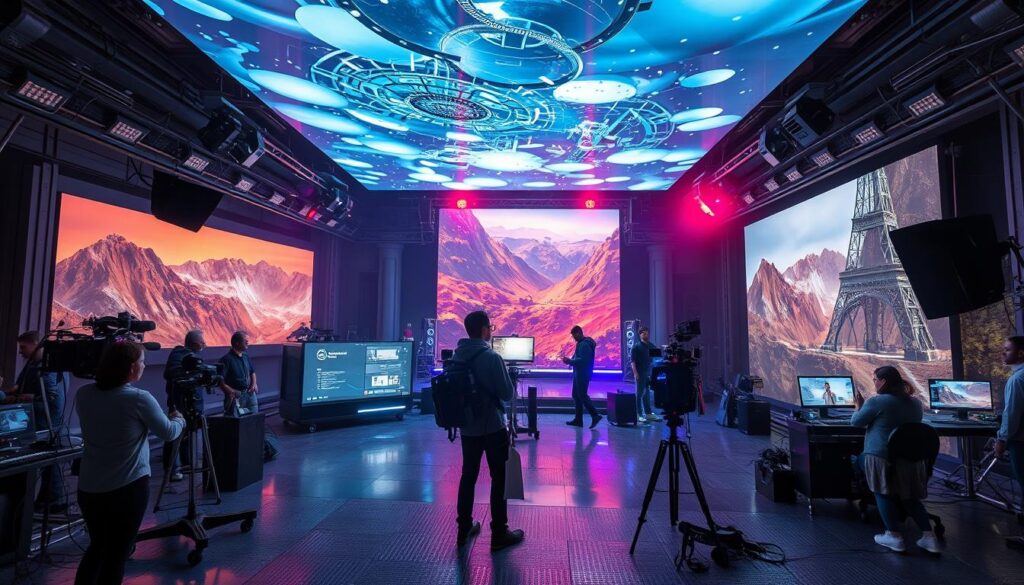
Technologies such as Deepfake and advanced CGI are changing the look of films and TV. They allow for super-realistic environments and detailed visual effects with less need for human input. This has a big impact on how visual effects are created.
Music Composition and AI
With MuseNet and Jukedeck, AI is having a big influence on composing music for different types of media. These platforms can automate the process and tailor music to get the right emotional response from an audience. This improves the mood and feel of entertainment.
| AI Tool | Application | Impact |
|---|---|---|
| MuseNet | Music composition for films and games | Generates diverse musical tracks enhancing auditory experience |
| DeepDream | Creation of surreal art forms | Enhances visual storytelling with unique, AI-generated images |
| ScriptBook | Script analysis and feedback | Assists in refining scripts with success prediction algorithms |
| Adobe Sensei | Video editing in Adobe Premiere Pro | Optimizes editing process through automated, intelligent adjustments |
| Jukedeck | Custom music creation | Enables rapid production of personalized soundtracks |
AI Agents and Audience Engagement
The entertainment world is changing fast, with AI-driven interactive entertainment leading the way. People now enjoy entertainment that’s tailored for them, thanks to virtual agents for the entertainment sector. This new approach is making experiences more personal and interactive than ever.
Personalization in Media Recommendations
AI helps make sure you get content that you’ll love. Services like Netflix use AI to understand what you like to watch. They suggest shows and movies you’re likely to enjoy. This makes the experience better for you and helps Netflix keep you watching longer. For a deeper dive, check out the ways AI is changing media.
Interactive Experiences and Gaming
AI is taking gaming to new levels. It changes games on the fly, based on how you play. This means games are more fun and personalized. Plus, AI creates stories in games that change based on your decisions. This makes playing even more immersive.
Virtual Influencers and AI Personalities
Virtual influencers are the new celebrities online. These AI characters chat, share, and promote just like real people. But they can reach more fans anytime, anywhere. They’re changing how brands connect with us on social media.
| Feature | Description | Impact |
|---|---|---|
| Content Personalization | AI analyzes user data to provide tailored recommendations. | Increases user retention and satisfaction. |
| Interactive Gaming | Real-time adaptation of game scenarios based on user interaction. | Enhances user engagement and game playability. |
| Virtual Influencers | Digital personalities that interact with real audiences. | Expands brand reach and modernizes user interaction. |
AI is making the entertainment world more exciting and personal. It gives creators and marketers insights into what we like. With AI, media is becoming more interactive and engaging. Learn about AI’s big impact in entertainment through Lyzr’s AI tools.
Challenges and Ethical Considerations
In the entertainment industry, using AI smart assistants brings ethical challenges. These issues need careful attention and action. As AI evolves, addressing these concerns helps keep technology honest and trustworthy.
Data Privacy Issues in AI Utilization
AI systems process lots of sensitive data. Keeping user privacy is now more important than ever. Entertainment platforms must protect users’ data well. They have a duty to keep information safe from leaks and wrong use.
The Risk of Job Displacement
AI can do tasks like subtitling and content management by itself. This might make people worried about their jobs. The entertainment industry should help workers move to new tech jobs. They should offer training for these new roles.
Bias in AI Algorithms
AI can be biased if it learns from biased data. This results in unfair media representation. Continuous checks and updates of algorithms are needed. This ensures AI stays fair and accurate.
AI offers many chances for media and entertainment to innovate. Yet, managing these ethical issues is key for AI to be widely accepted and grow.
| Key Segment | 2022 Revenue | Ethical Consideration |
|---|---|---|
| AI Services | USD 13.8 billion | Data Privacy |
| AI in Content Management | Revenue Share 21.78% (2021) | Job Displacement |
| AI Bias Mitigation | Relevance in Algorithm Adjustment | Bias Correction |

Future Prospects of AI Agents
The horizon for AI in the entertainment industry is bright with innovation and prospects. As the AI agent for entertainment industry grows, so does its impact. This growth is set to change the entire landscape.
Predicted Trends in the Entertainment Sector
Future trends in the entertainment industry show a big leap in AI. This leap will make services more personal and content production smoother. With 81% of customers wanting quicker, more individualized services, AI agents become crucial.
These technologies will also use predictive analytics more. This lets content strategists improve their plans with accurate audience data.
Media companies are getting on board with 90% planning to invest more in AI in the next 24 months. This big investment highlights the important role of AI agents. They’ll help in creating personal viewing experiences and optimizing ads. This enhances viewer experience and ad performance.
Collaborations Between AI and Creative Professionals
Partnerships between AI agents and creative folks are expected to be game-changing. They combine human creativity and AI efficiency. This opens up new forms of entertainment and business models.
| AI Trend | Impact on Entertainment Industry | Status by 2025 |
|---|---|---|
| AI-driven personalized experiences | Enhances customer engagement and satisfaction | Widespread implementation |
| Multi-agent systems | Addresses complex, multi-disciplinary challenges efficiently | Emerging prominence |
| Chief-of-staff agents | Facilitates orchestration of extensive AI networks | Rising adoption |
AI agents are changing how we create and deliver content. They also set new standards for the entertainment industry’s future. Looking ahead, the blend of AI and human creativity promises more immersive and interactive media experiences. This marks an exciting time for both creators and viewers in entertainment.
Conclusion: Embracing AI in Entertainment
The entertainment industry is always changing. AI is leading this change. AI helps create content and make user experiences better. For example, Netflix and Spotify use AI to suggest shows and songs. This makes customers happy. Also, AI plays a big part in storytelling. It uses technologies like NLP (Natural Language Processing) and machine learning. This lets creators make rich, interactive stories.
Key Takeaways for Industry Stakeholders
AI has a big impact on how we make and enjoy media. It helps from the start of making a show to when people watch it. AI can do many things, like making music and animations. But, we must think about ethics. It’s important to use AI in a way that’s true and careful with data.
Strategies for Successful AI Integration in Entertainment
Using AI well takes careful planning. It should make operations smoother and help connect with the audience. AI gives us lots of data on what people like. This helps make content that people will enjoy. But, we must be careful. AI can replace jobs. So, we need to use AI in a way that’s ethical. By doing this, AI will not only save money but also help the industry grow. It will stay strong, ethical, and offer great experiences. The future of entertainment with AI looks exciting. We are just at the start.
FAQ
What innovations are AI agents bringing to the entertainment industry?
AI agents are making big changes in entertainment. They introduce AI-made content recommendations and automated content creation. Also, they bring predictive analytics and interactive fun. This transforms content creation, how it’s shared, and enjoyed. It makes things more efficient and engages users more.
How is AI technology evolving within the entertainment sector?
AI mixes creativity with smart algorithms to better user experiences. It automates how content is shared too. Thanks to machine learning, understanding language, and analyzing data, services are more personal and interactive. AI also makes using blockchain for managing digital rights smoother.
Can you provide examples of how AI has been implemented in the entertainment industry?
AI helps write scripts, improve visuals, and compose music in the industry. Some systems analyze scripts to create new stories. Others make visual effects look real or create catchy music easily.
How does AI impact content creation in entertainment?
AI offers tools for writing scripts, enhancing visuals, and making music. These tasks used to take a lot of human work. Now, AI speeds this up, boosts quality, and opens new creative doors.
In what ways do AI agents enhance audience engagement?
AI agents offer really personal content suggestions. They shape fun gaming and virtual influencer chats. By understanding what each user likes, they make media more enjoyable and personal, which makes the experience richer.
What are the ethical challenges associated with AI in the entertainment industry?
The industry must tackle ethical issues like protecting data privacy and handling job losses. It’s also important to avoid bias in AI. Companies should keep user data safe, think about automation’s effects on jobs, and make AI systems fair.
What are the future prospects for AI agents in the entertainment industry?
AI agents are expected to make personalization, content making, and predicting trends even better. Teaming up AI with creative people could lead to more innovative experiences. It also aims at more effective content planning based on what audiences like.
How can the entertainment industry successfully integrate AI technology?
To integrate AI well, the industry needs to align it with creative aims, what audiences expect, and ethical rules. It’s key to use AI’s strengths while keeping the core values and stories that define entertainment.