Overview
What It Is
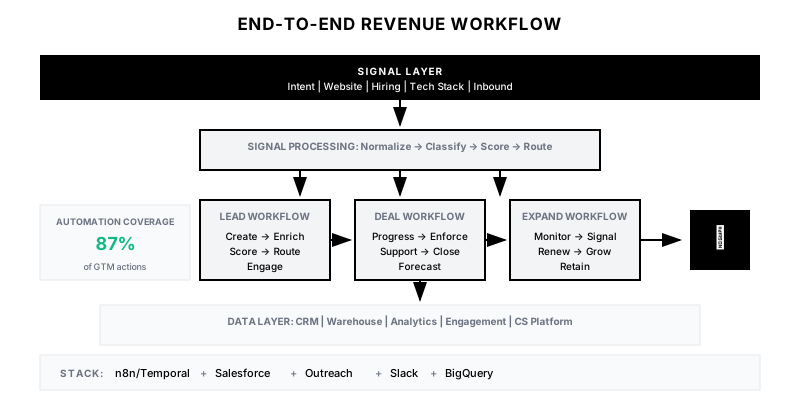
A comprehensive orchestration layer that connects your entire GTM tech stack into unified, automated workflows. From signal detection to lead enrichment, routing, engagement sequences, deal progression, and post-sale expansion—every step is automated, measured, and optimized as one cohesive system.
Why It Matters
Most companies have 10-50 GTM tools that don't talk to each other, creating data silos, manual handoffs, and missed opportunities. End-to-end orchestration eliminates gaps, ensures consistent execution, and turns your tech stack into a true revenue machine.
Who It's For
- RevOps leaders building scalable go-to-market
- GTM engineers architecting revenue systems
- CROs wanting visibility across the funnel
- Ops teams tired of manual data shuffling
Preconditions
Required Tools
- Workflow orchestration (n8n, Temporal, Tray.io)
- CRM (Salesforce, HubSpot)
- Engagement platform (Outreach, Salesloft)
- Data warehouse (BigQuery, Snowflake)
Required Fields/Properties
- Standardized data model across systems
- API access to all GTM tools
- Clear process definitions for each stage
- SLAs for handoffs and response times
Definitions Required
- Lead lifecycle stages
- Routing rules and ownership
- Handoff criteria between teams
- Escalation paths and SLAs
Step-by-Step Workflow
Map the Revenue Workflow
Goal: Document every step from signal to revenue
Actions:
- Map signal sources and triggers
- Document lead lifecycle stages
- Define opportunity progression criteria
- Map post-sale expansion flows
- Identify handoff points and owners
Implementation Notes: Before building, document. Create a visual map of how data flows through your GTM motion. Identify every system, handoff, and decision point.
Build Unified Data Model
Goal: Create consistent data structure across systems
Actions:
- Define canonical data objects (Lead, Contact, Account, Opportunity)
- Map field equivalents across systems
- Build transformation layer
- Implement ID matching and deduplication
- Set up master data sync
Implementation Notes: Data inconsistency breaks workflows. Build a canonical model that translates between systems. Use a data warehouse as the source of truth.
Build Signal Processing Pipeline
Goal: Centralize and process all inbound signals
Actions:
- Create signal ingestion endpoints
- Build signal classification engine
- Implement signal scoring
- Route signals to appropriate workflows
- Track signal attribution
Implementation Notes: Signals are the fuel for your revenue engine. Create a central processor that normalizes signals from any source into a standard format for downstream workflows.
Implement Lead-to-Opportunity Workflow
Goal: Automate the journey from lead to qualified opportunity
Actions:
- Build lead creation and enrichment flow
- Implement scoring and routing
- Connect to engagement sequences
- Handle response classification
- Automate SDR → AE handoff
Implementation Notes: This is the most complex workflow. Break it into sub-workflows (enrichment, scoring, routing, engagement, handoff) that can be tested and improved independently.
Build Deal Progression Workflow
Goal: Automate deal management from opportunity to close
Actions:
- Monitor deal stage changes
- Enforce data requirements per stage
- Trigger deal support workflows (legal, deal desk)
- Update forecast automatically
- Alert on deal risks
Implementation Notes: Deal workflows are more about monitoring and enforcement than automation. Ensure reps can't skip required steps, and surface risks before they become problems.
Build Expansion & Retention Workflow
Goal: Automate post-sale revenue motions
Actions:
- Monitor usage for expansion signals
- Trigger expansion workflows
- Manage renewal process
- Detect and mitigate churn risk
- Coordinate CS and Sales on expansion
Implementation Notes: Post-sale workflows often have the highest ROI because existing customers convert at higher rates. Connect product usage, community signals, and support data to trigger expansion plays.
Implement Observability & Reporting
Goal: Monitor workflow health and measure impact
Actions:
- Track workflow execution metrics
- Build funnel conversion dashboards
- Monitor SLA compliance
- Measure automation coverage
- Report on revenue impact
Implementation Notes: You can't improve what you don't measure. Track every workflow execution, step timing, and outcome. Build dashboards for operators and executives.
Templates
Workflow Architecture Diagram
```
                    ┌─────────────────────────────────────────────────────────┐
                    │                  SIGNAL LAYER                           │
                    │  Intent Data │ Website │ Hiring │ Tech Stack │ Inbound │
                    └──────────────────────────┬──────────────────────────────┘
                                               │
                                               ▼
                    ┌─────────────────────────────────────────────────────────┐
                    │              SIGNAL PROCESSING                          │
                    │     Normalize → Classify → Score → Route               │
                    └──────────────────────────┬──────────────────────────────┘
                                               │
              ┌────────────────────────────────┼────────────────────────────────┐
              │                                │                                │
              ▼                                ▼                                ▼
    ┌─────────────────┐              ┌─────────────────┐              ┌─────────────────┐
    │  LEAD WORKFLOW  │              │  DEAL WORKFLOW  │              │ EXPAND WORKFLOW │
    │  Create         │              │  Progress       │              │  Monitor        │
    │  Enrich         │──────────────│  Enforce        │──────────────│  Signal         │
    │  Score          │              │  Support        │              │  Renew          │
    │  Route          │              │  Close          │              │  Grow           │
    │  Engage         │              │                 │              │                 │
    └─────────────────┘              └─────────────────┘              └─────────────────┘
              │                                │                                │
              └────────────────────────────────┼────────────────────────────────┘
                                               │
                                               ▼
                    ┌─────────────────────────────────────────────────────────┐
                    │                    DATA LAYER                           │
                    │  CRM │ Warehouse │ Analytics │ Engagement │ Success    │
                    └─────────────────────────────────────────────────────────┘
```
SLA Definitions
| Handoff | SLA | Owner | Escalation |
|---------|-----|-------|------------|
| Signal → Lead Created | <5 min | Automation | RevOps |
| Lead → First Contact | <1 hour (business) | SDR | SDR Manager |
| Meeting Booked → Prep Sent | <2 hours | AE | AE Manager |
| Demo → Proposal | <48 hours | AE | Deal Desk |
| Won → Onboarding | <24 hours | CS | CS Manager |
| Churn Signal → Outreach | <4 hours | CSM | CS Director |
Executive Dashboard Metrics
**Pipeline Velocity**
- Signals → MQL: X% conversion, Y day avg time
- MQL → SQL: X% conversion, Y day avg time
- SQL → Opportunity: X% conversion, Y day avg time
- Opportunity → Won: X% win rate, Y day cycle

**Automation Coverage**
- Lead creation: 95% automated
- Enrichment: 100% automated
- Routing: 90% automated
- Engagement: 85% automated
- Deal progression: 70% automated
- Expansion detection: 80% automated

**SLA Compliance**
- Signal processing: 99.5% within SLA
- Lead response: 87% within SLA
- Deal support: 92% within SLA
- Churn response: 78% within SLA

**Revenue Attribution**
- Revenue from automated workflows: $X.XM
- Deals influenced by automation: XXX
- Time saved per week: XXX hours
QA + Edge Cases
Test Cases Checklist
- End-to-end signal to opportunity flow
- Verify all enrichment sources populate
- Test routing rules across territories
- Validate deal stage requirements enforced
- Confirm expansion signals trigger correctly
- Test failover and retry mechanisms
Common Failure Modes
- Data sync failures: Systems get out of sync causing workflow failures. Implement idempotency and reconciliation jobs.
- API rate limits: Enrichment or CRM APIs throttle requests. Implement queuing and backoff strategies.
- Workflow bottlenecks: One slow step blocks entire workflow. Use async processing and parallel execution where possible.
Troubleshooting Tips
- If workflows are slow, check for sequential steps that could run in parallel
- For failed enrichment, verify API keys and fallback to cached data
- If SLAs are missed, review queue depths and worker capacity
KPIs and Reporting
KPIs to Track
- Automation Coverage: >85% of GTM actions automated
- SLA Compliance: >90% across all handoffs
- Pipeline Velocity: 20% improvement YoY
- Revenue from Automated Workflows: >$5M influenced ARR/quarter
Suggested Dashboard Widgets
- Workflow Health: Success rate and latency by workflow
- Funnel Conversion: Stage-by-stage conversion rates
- SLA Tracker: Compliance by handoff type
- Revenue Attribution: Revenue influenced by automation