Overview
What It Is
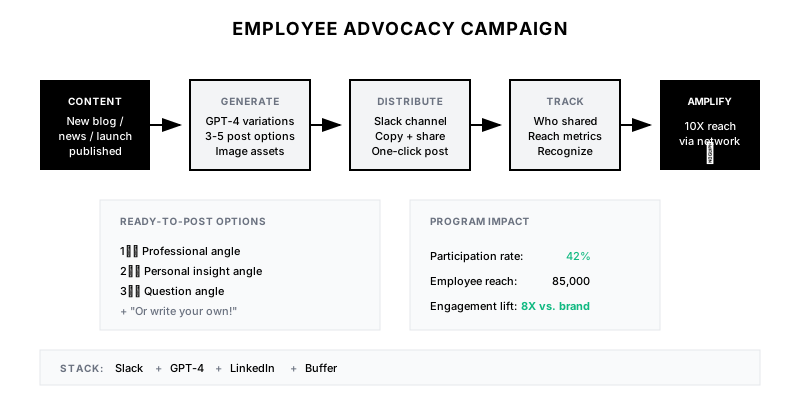
The Employee Advocacy Campaign makes it effortless for employees to share company content on their personal networks. When new content is published, employees receive ready-to-post text and images through Slack, with one-click posting options. It tracks participation and measures the amplification effect.
Why It Matters
Employee networks are untapped distribution channels. A company with 100 employees has potential reach to thousands of connections. Content shared by employees gets 8x more engagement than brand posts. Make it easy, and people will share.
Who It's For
- Marketing teams expanding content reach
- Sales teams building personal brands
- HR teams promoting employer brand
- Executives modeling social engagement
Preconditions
Required Tools
- Slack for internal distribution
- Employee advocacy platform (optional: EveryoneSocial, GaggleAMP)
- Social scheduling (Buffer, Hootsuite)
- Content repository (Notion, SharePoint)
- Analytics for tracking
Required Fields/Properties
- Content to share (blog, news, updates)
- Pre-written post variations
- Shareable images/graphics
- Employee participation list
- Posting guidelines
Definitions Required
- What content gets advocacy distribution
- How many post variations to provide
- Participation expectations (voluntary vs. encouraged)
- Recognition/incentive program
- Brand safety guidelines
Step-by-Step Workflow
Define Advocacy Program
Goal: Establish structure and expectations for employee sharing.
Actions:
- Decide participation model (voluntary, encouraged, required)
- Create content categories for advocacy
- Set posting frequency guidance
- Build brand safety guidelines
- Design recognition/incentive program
Implementation Notes: Voluntary with encouragement works best. Forced advocacy feels inauthentic and employees resist. Make it easy, provide value (builds their brand too), and recognize participation.
Automation Logic:
Employee Advocacy Program Structure:

1. CONTENT CATEGORIES
   - Company News (product launches, funding, awards)
   - Thought Leadership (blog posts, reports, insights)
   - Job Openings (help recruit)
   - Culture/Events (employer brand)
   - Customer Success (case studies, testimonials)

2. FREQUENCY GUIDANCE
   - Suggested: 1-2 posts per week
   - Not required, always voluntary
   - Quality over quantity

3. PARTICIPATION TIERS
   - Champions: Share weekly, help create content
   - Active: Share 2-4x monthly
   - Occasional: Share big announcements

4. RECOGNITION
   - Monthly leaderboard (opt-in)
   - Quarterly top advocate recognition
   - No punishment for non-participation

5. GUIDELINES
   - Can personalize posts (encouraged)
   - Must not share confidential info
   - Disclose employment where required
Build Content Distribution
Goal: Get shareable content to employees effortlessly.
Actions:
- Create Slack channel for advocacy content
- Generate multiple post variations per content piece
- Include ready-to-use images
- Add one-click copy and share functionality
- Schedule distribution timing
Implementation Notes: Remove all friction. Employees should be able to share in under 30 seconds. Provide copy, provide images, provide the link. They just have to post.
Automation Logic:
Slack Advocacy Post Template:

📢 *NEW CONTENT TO SHARE*

**{{content_title}}**
{{content_description}}

🔗 {{content_link}}

---

**Ready-to-post options (pick one or customize):**

*LinkedIn Option 1:*
```
{{linkedin_post_1}}
```
[Copy to clipboard]

*LinkedIn Option 2:*
```
{{linkedin_post_2}}
```
[Copy to clipboard]

*Twitter Option:*
```
{{twitter_post}}
```
[Copy to clipboard]

---

📸 *Shareable image attached*
[Download image]

---

💡 *Pro tip: Add your own perspective for better engagement!*

[I shared it! ✓] ← Click to track participation
Generate Post Variations
Goal: Create multiple unique posts per content piece.
Actions:
- Use GPT-4 to generate 3-5 variations
- Vary angles and hooks
- Include different CTAs
- Platform-specific versions
- Allow for personalization
Implementation Notes: Variations prevent a wall of identical posts from your company. Each person sharing the same exact text looks coordinated and inauthentic. Variety is key.
Automation Logic:
GPT-4 Post Variation Prompt:

Create {{count}} social media post variations for employees to share.

Content to share:
Title: {{title}}
Summary: {{summary}}
Link: {{link}}
Key Points: {{key_points}}

Requirements:
1. Each variation should have a different angle/hook
2. Mix of formats: insight, question, statistic, story
3. Natural, not corporate-speak
4. Include link naturally
5. Under 280 chars for Twitter, 300 words for LinkedIn

Generate:
- 3 LinkedIn post variations
- 2 Twitter variations
- 1 casual/fun variation for personal tone

Example angles to use:
- Personal insight ("I learned...")
- Industry trend connection
- Contrarian take
- Direct value statement
- Question to audience
Track Participation
Goal: Measure who shares and the impact of sharing.
Actions:
- Build self-report mechanism in Slack
- Track who participates and how often
- Measure reach and engagement from employee posts
- Attribute traffic and leads where possible
- Create participation dashboard
Implementation Notes: Tracking is tricky without an advocacy platform. Self-reporting ('I shared it!' button) is simple. UTM parameters on links help attribute traffic. Don't over-engineer tracking.
Recognize and Iterate
Goal: Maintain participation and improve over time.
Actions:
- Publish monthly participation stats
- Recognize top advocates
- Share impact metrics (reach, engagement)
- Gather feedback on content preferences
- Iterate on post quality and format
Implementation Notes: Recognition drives participation. A Slack shoutout or leaderboard creates healthy competition. Share the impact—'Employee posts drove 10,000 impressions last month' motivates continued participation.
Templates
Advocacy Slack Message
📢 *Share This: {{content_title}}*

We just published something great that your network would find valuable!

**What it's about:**
{{one_sentence_summary}}

**Why share:**
{{why_it_matters}}

🔗 {{link}}

---

**Copy one of these or write your own:**

1️⃣ *Professional angle:*
"{{professional_post}}"

2️⃣ *Personal insight angle:*
"{{personal_post}}"

3️⃣ *Question angle:*
"{{question_post}}"

📸 Image attached for visual posts

---

[✅ I shared it] [🔗 Copy post 1] [🔗 Copy post 2] [🔗 Copy post 3]

*Shared by {{#count}} colleagues so far*
Monthly Advocacy Report
📊 *EMPLOYEE ADVOCACY REPORT*
{{month}} {{year}}
━━━━━━━━━━━━━━━━━━━━━━━━━━━━━━━━━━━━━

**Program Impact:**
- Total employee shares: {{total_shares}}
- Estimated reach: {{total_reach}} impressions
- Engagement generated: {{total_engagement}}
- Website traffic from shares: {{traffic}}

**Participation:**
- Active advocates: {{active_count}} / {{total_employees}}
- Participation rate: {{participation_rate}}%
- New participants: {{new_participants}}

━━━━━━━━━━━━━━━━━━━━━━━━━━━━━━━━━━━━━

**🏆 Top Advocates This Month:**

🥇 {{top_1_name}} - {{top_1_shares}} shares
🥈 {{top_2_name}} - {{top_2_shares}} shares
🥉 {{top_3_name}} - {{top_3_shares}} shares

**Most Shared Content:**
1. {{top_content_1}} ({{shares_1}} shares)
2. {{top_content_2}} ({{shares_2}} shares)
3. {{top_content_3}} ({{shares_3}} shares)

━━━━━━━━━━━━━━━━━━━━━━━━━━━━━━━━━━━━━

*Thank you for amplifying {{company_name}}!*
Advocacy Guidelines
## Employee Advocacy Guidelines

### Why Participate?

- **Build your professional brand** - Share insights, not just company news
- **Expand your network** - Engage with others in your industry
- **Support teammates** - Help recruiting and sales efforts
- **Stay informed** - Keep up with company happenings

### What to Share

✅ Company blog posts and insights
✅ Product announcements and updates
✅ Job openings (help us recruit!)
✅ Industry news with your take
✅ Team wins and milestones
✅ Events and webinars

### What Not to Share

❌ Confidential information
❌ Financial projections or unannounced deals
❌ Anything marked "internal only"
❌ Criticism of competitors (stay classy)
❌ Political content from company account

### Tips for Better Posts

1. **Add your perspective** - Don't just share, add why you found it valuable
2. **Tag relevant people** - Increase visibility and start conversations
3. **Use visuals** - Posts with images get 2x engagement
4. **Engage back** - Respond to comments on your posts
5. **Be consistent** - Regular posting builds your presence

### Disclosure

If required by platform or context, note your employment:
"Full disclosure: I work at [Company]"

### Questions?

Reach out to {{advocacy_contact}} or ask in #employee-advocacy
Participation Tracker
| Employee | Department | Shares This Month | All-Time | Engagement | Status |
|----------|------------|-------------------|----------|------------|--------|
| Sarah Chen | Marketing | 12 | 45 | 2,340 | Champion |
| Mike Johnson | Sales | 8 | 32 | 1,890 | Active |
| Lisa Park | Engineering | 4 | 18 | 780 | Active |
| Tom Wright | Customer Success | 6 | 28 | 1,200 | Active |
| Amy Liu | Product | 2 | 8 | 340 | Occasional |
QA + Edge Cases
Test Cases Checklist
- New blog published → advocacy post sent to Slack within 1 hour
- Slack message includes 3+ post variations → verified
- Employee clicks 'I shared' → participation tracked
- Monthly report generated → sent to leadership
- Top advocates recognized → mentioned in all-hands
Common Failure Modes
- Low participation: Employees don't engage. Make it easier, provide better content, add recognition.
- Identical posts: Everyone posts the same thing. Provide more variations, encourage customization.
- Content not valuable: Employees won't share content that doesn't help their brand. Focus on genuinely useful content.
- Forced feeling: Advocacy feels mandatory. Keep it voluntary, recognize but don't pressure.
Troubleshooting Tips
- If participation is low: Survey employees on what they'd want to share
- If posts look robotic: Encourage more customization, reduce corporate-speak
- If engagement is low: Review post quality, may need better hooks
- If tracking is broken: Simplify to self-reporting, don't over-engineer
KPIs and Reporting
KPIs to Track
- Participation Rate: >30% of employees share at least 1x/month
- Reach Multiplier: Employee reach exceeds company page reach
- Engagement Rate: Employee posts achieve 2x+ engagement vs. brand posts
- Content Coverage: >50% of published content gets employee amplification
- Referral Traffic: Track % of traffic from employee social shares
Suggested Dashboard Widgets
- Participation Overview: Active advocates vs. total employees
- Content Amplification: Shares per content piece
- Reach Metrics: Estimated impressions from employee posts
- Top Advocates: Leaderboard of most active participants