Overview
What It Is
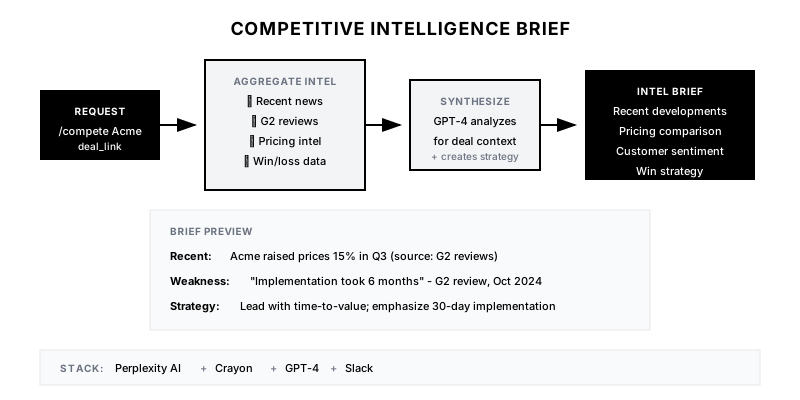
The Competitive Intelligence Brief generates deep-dive competitive analysis on demand. When a rep identifies a competitor in a deal, they can request a brief that aggregates recent news, pricing intelligence, customer reviews, product updates, and win/loss patterns—delivered within minutes rather than requiring manual research.
Why It Matters
Generic battlecards cover the basics, but strategic deals need more. Knowing that a competitor just raised prices, lost a major customer, or launched a new feature changes how you position. On-demand briefs give reps fresh, relevant intelligence when the stakes are high.
Who It's For
- Account Executives in competitive deals
- Sales Enablement teams supporting strategic opportunities
- Sales managers coaching on competitive positioning
- Product marketing teams gathering field intelligence
Preconditions
Required Tools
- Perplexity AI or Crayon for competitive monitoring
- GPT-4 for synthesis and formatting
- G2/TrustRadius for review mining
- Slack or email for delivery
- CRM for deal context
Required Fields/Properties
- Competitor name and website
- Deal size and stage
- Prospect industry and use case
- Specific competitive questions (optional)
Definitions Required
- What intelligence categories to include
- Sources to aggregate
- Freshness requirements (how recent is 'recent')
- Delivery format and turnaround time
Step-by-Step Workflow
Define Brief Structure
Goal: Create a template for consistent, comprehensive competitive briefs.
Actions:
- List intelligence categories: pricing, product, GTM, customers, news
- Define sources for each category
- Create output template with sections
- Include standard battlecard content as baseline
- Add deal-specific customization options
Implementation Notes: A good brief should take 10 minutes to read and be actionable immediately. Include 'what to say' and 'what to ask' sections—not just raw intelligence.
Automation Logic:
Competitive Brief Structure:

1. EXECUTIVE SUMMARY (2-3 sentences)
   Key insight for this specific deal

2. RECENT DEVELOPMENTS (Last 90 days)
   - Product launches/updates
   - Pricing changes
   - Leadership changes
   - Funding/M&A

3. PRODUCT COMPARISON
   - Feature comparison table
   - Strengths we counter
   - Weaknesses to exploit

4. PRICING INTELLIGENCE
   - Known pricing/packaging
   - Recent price changes
   - Discount patterns

5. CUSTOMER SENTIMENT
   - Recent G2/review highlights
   - Common complaints
   - Reasons customers leave

6. WIN/LOSS INSIGHTS
   - Recent wins against them
   - Recent losses (and why)
   - What works in our wins

7. RECOMMENDED STRATEGY
   - Key talking points for this deal
   - Questions to ask prospect
   - Traps to set
Build Research Automation
Goal: Aggregate intelligence from multiple sources automatically.
Actions:
- Configure Perplexity AI for recent news search
- Set up G2/TrustRadius review scraping
- Pull from Crayon if available
- Query internal win/loss database
- Aggregate LinkedIn for leadership changes
Implementation Notes: Perplexity excels at recent news with citations. For reviews, scrape G2's public pages or use their API. Internal win/loss data is often the most valuable—don't skip it.
Automation Logic:
Research Queries:

1. Perplexity - News Search:
   "{{competitor_name}} news announcements last 90 days"
   "{{competitor_name}} pricing changes 2024"
   "{{competitor_name}} {{prospect_industry}} customers"

2. G2 Review Mining:
   Search: {{competitor_name}}
   Filter: Last 6 months, {{prospect_company_size}}
   Extract: Pros, cons, switching reasons

3. Internal Win/Loss:
   Query: Deals mentioning {{competitor_name}}
   Filter: Last 12 months
   Extract: Win themes, loss reasons
Synthesize with AI
Goal: Transform raw research into actionable intelligence.
Actions:
- Feed aggregated research to GPT-4
- Apply deal context for relevance filtering
- Generate executive summary
- Create recommended strategy section
- Format into brief template
Implementation Notes: The AI synthesis step is crucial. Raw data dumps aren't useful. The output should answer: 'What does this mean for my deal and what should I do about it?'
Automation Logic:
GPT-4 Synthesis Prompt:

You are creating a competitive intelligence brief for a sales rep.

Deal Context:
- Competitor: {{competitor_name}}
- Prospect: {{prospect_company}} ({{industry}}, {{company_size}})
- Deal Size: {{deal_size}}
- Deal Stage: {{deal_stage}}
- Specific Questions: {{rep_questions}}

Raw Research:
{{aggregated_research}}

Create a brief that:
1. Summarizes the most important 2-3 insights for THIS deal
2. Highlights recent changes that affect competitive positioning
3. Provides specific talking points and questions to ask
4. Includes direct quotes from reviews that could resonate with prospect
5. Recommends a win strategy based on patterns

Format: Use the template structure provided.
Tone: Direct, actionable, skip the fluff.
Enable On-Demand Requests
Goal: Make it easy for reps to request briefs.
Actions:
- Create Slack command for brief requests
- Build simple request form (competitor, deal, questions)
- Set up queue for processing
- Configure delivery (DM or channel)
- Track request to delivery time
Implementation Notes: '/compete [competitor] [deal link]' in Slack is ideal. Make requests as frictionless as possible—if it's easier to Google, reps won't use the system.
Establish Feedback Loop
Goal: Improve briefs based on actual usage and outcomes.
Actions:
- Track which briefs are requested
- Collect rep feedback on usefulness
- Correlate with deal outcomes
- Identify gaps in intelligence coverage
- Update sources and prompts based on feedback
Implementation Notes: After every competitive deal closes, ask: 'Was the brief helpful?' and 'What was missing?' Feed insights back into the system.
Templates
Competitive Brief Template
🎯 COMPETITIVE INTELLIGENCE BRIEF
━━━━━━━━━━━━━━━━━━━━━━━━━━━━━━━━━━━━━

📊 **Competitor:** {{competitor_name}}
🏢 **Deal:** {{prospect_company}} | {{deal_size}} | {{deal_stage}}
📅 **Generated:** {{date}}

━━━━━━━━━━━━━━━━━━━━━━━━━━━━━━━━━━━━━

## ⚡ EXECUTIVE SUMMARY
{{executive_summary}}

## 📰 RECENT DEVELOPMENTS
{{#each recent_news}}
• **{{date}}**: {{headline}} ([source]({{url}}))
{{/each}}

## 🔍 PRODUCT COMPARISON
| Capability | Us | {{competitor_name}} | Edge |
|------------|-----|-----|------|
{{#each features}}
| {{name}} | {{us}} | {{them}} | {{edge}} |
{{/each}}

## 💰 PRICING INTELLIGENCE
{{pricing_intel}}

## 💬 CUSTOMER SENTIMENT (G2 Reviews)
**What customers love:**
{{positive_reviews}}

**What customers hate:**
{{negative_reviews}}

**Why customers leave:**
{{churn_reasons}}

## 📈 WIN/LOSS PATTERNS
**Recent wins against {{competitor_name}}:**
{{win_patterns}}

**Recent losses (learn from these):**
{{loss_patterns}}

## 🎯 RECOMMENDED STRATEGY
**Key talking points:**
{{#each talking_points}}
• {{point}}
{{/each}}

**Questions to ask:**
{{#each questions}}
• {{question}}
{{/each}}

**Traps to set:**
{{#each traps}}
• {{trap}}
{{/each}}
Brief Request Form
🔍 REQUEST COMPETITIVE BRIEF

**Competitor:** [Dropdown or text field]
**Deal Link:** [CRM opportunity URL]
**Deal Size:** [$X]
**Deal Stage:** [Dropdown]

**Specific Questions (optional):**
[ ] Pricing/discounting patterns
[ ] Recent product changes
[ ] Customer references in our industry
[ ] Why customers leave them
[ ] Other: [Free text]

**Urgency:**
( ) Standard (4 hours)
( ) Urgent (1 hour) - requires justification

[Submit Request]
Slack Brief Request Command
// Slack slash command handler
/compete <competitor> <deal_url> [--urgent] [--questions "your questions"]

// Examples:
/compete Acme https://crm.com/opp/123
/compete "Beta Corp" https://crm.com/opp/456 --urgent
/compete Gamma https://crm.com/opp/789 --questions "What's their pricing for enterprise?"
Intelligence Sources Matrix
| Category | Primary Source | Secondary Source | Update Frequency |
|----------|---------------|------------------|------------------|
| News | Perplexity AI | Google News | Real-time |
| Reviews | G2 | TrustRadius | Weekly |
| Pricing | Internal deals | Competitor site | Monthly |
| Product | Competitor changelog | G2 feature comparison | Weekly |
| Win/Loss | CRM | Gong calls | Weekly |
QA + Edge Cases
Test Cases Checklist
- Brief requested → delivered within SLA (4 hours standard, 1 hour urgent)
- Unknown competitor → graceful handling with basic web research
- No recent news found → clear indication, focus on other sections
- Rep feedback collected → routed for system improvement
- Brief correlated with won deal → success pattern logged
Common Failure Modes
- Stale intelligence: News from 6 months ago isn't helpful. Filter aggressively for recency and clearly date all information.
- Generic content: Brief that could apply to any deal isn't useful. Incorporate deal context and prospect specifics.
- Too long to read: 20-page briefs don't get read. Keep to 2-3 pages max with executive summary up top.
- Missing 'so what': Data without recommendations is useless. Every brief needs a 'what should I do' section.
Troubleshooting Tips
- If briefs aren't requested: Make the process easier; consider auto-generating for large deals
- If intelligence is incomplete: Add more sources; review which categories are consistently weak
- If reps say briefs aren't helpful: Survey for specific gaps; may need more deal context integration
- If delivery is too slow: Pre-cache common competitors; use faster LLM for non-urgent requests
KPIs and Reporting
KPIs to Track
- Brief Request Rate: Brief requested for 80%+ of competitive deals >$50K
- Delivery SLA: 95% of briefs delivered within SLA
- Rep Satisfaction: >8/10 average helpfulness rating
- Competitive Win Rate: Track win rate for deals with vs. without briefs
- Intelligence Freshness: >70% of news items from last 90 days
Suggested Dashboard Widgets
- Briefs by Competitor: Which competitors drive the most brief requests
- Request to Delivery Time: How quickly briefs are being delivered
- Win Rate with Brief: Competitive win rate for deals that requested briefs
- Feedback Trends: Rep satisfaction and common improvement requests