Overview
What It Is
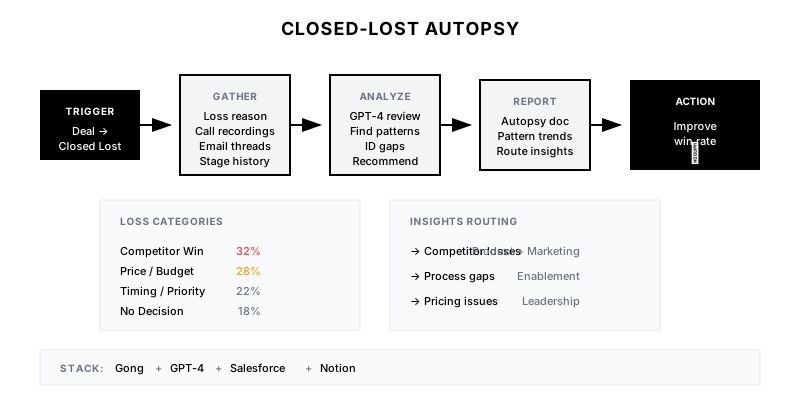
The Closed-Lost Autopsy automatically triggers when a deal is marked lost, analyzing all available data—call recordings, emails, deal progression, and rep notes—to understand why the deal didn't close. It categorizes losses, identifies patterns across multiple losses, and generates actionable insights for improving win rates.
Why It Matters
Most teams mark deals lost and move on. The learnings die with the opportunity. Systematic autopsy reveals whether you're losing to competitors, price, timing, or your own process. These patterns are invisible without structured analysis.
Who It's For
- Sales leaders wanting to improve team win rates
- RevOps teams tracking competitive dynamics
- Product teams needing market feedback
- Enablement teams identifying training gaps
Preconditions
Required Tools
- CRM with opportunity stage tracking
- Call recording platform (Gong, Chorus)
- GPT-4 for analysis and pattern extraction
- Knowledge base for storing insights (Notion, Confluence)
- Reporting tool for trend analysis
Required Fields/Properties
- Loss reason (required field before close)
- Competitor (if applicable)
- Call recordings from deal
- Email thread history
- Deal timeline and stage progression
Definitions Required
- Loss reason taxonomy (standardized categories)
- What constitutes a 'competitive loss' vs. 'no decision'
- Autopsy depth by deal size
- Distribution of insights (who sees what)
Step-by-Step Workflow
Define Loss Taxonomy
Goal: Create standardized loss categories for consistent analysis.
Actions:
- Define primary loss reasons (competitor, price, timing, fit, etc.)
- Create secondary categories for detail
- Build required vs. optional fields
- Design the loss reason picklist in CRM
- Train team on accurate categorization
Implementation Notes: A good taxonomy has 5-7 primary categories, each with 3-5 sub-reasons. Too granular = inconsistent tagging. Too broad = useless insights. 'No decision' should require further explanation.
Automation Logic:
Loss Reason Taxonomy:

1. COMPETITOR WIN
   - Lost to [specific competitor]
   - Better feature/functionality
   - Better pricing
   - Existing relationship
   - Better integration/ecosystem

2. PRICE/BUDGET
   - Over budget (no budget flexibility)
   - Cheaper alternative selected
   - ROI not justified
   - Budget cut/freeze

3. TIMING
   - Not a priority now
   - Project delayed/canceled
   - Key stakeholder left
   - Reorg/merger

4. PRODUCT FIT
   - Missing critical feature
   - Technical limitation
   - Integration requirements
   - Security/compliance gap

5. NO DECISION
   - Prospect went dark
   - Status quo wins
   - Committee couldn't align
   - Internal project preferred

6. PROCESS/EXECUTION
   - Lost champion
   - Didn't engage decision maker
   - Pricing/proposal issues
   - Implementation concerns
Build Autopsy Trigger
Goal: Automatically initiate analysis when deals close lost.
Actions:
- Create CRM workflow on Closed Lost stage
- Validate loss reason field is populated
- Queue deal for autopsy analysis
- Adjust depth based on deal value
- Notify relevant stakeholders
Implementation Notes: Block the stage change until loss reason is filled. Nothing is more frustrating than analyzing deals with 'Other' as the reason. Make reps do the work upfront.
Automation Logic:
// Example: Autopsy trigger configuration
const triggerAutopsy = async (opportunity) => {
  // Validate required fields
  if (!opportunity.loss_reason) {
    throw new Error('Loss reason required before closing');
  }

  // Determine analysis depth
  const depth = opportunity.amount >= 100000 ? 'deep' :
                opportunity.amount >= 25000 ? 'standard' : 'light';

  // Gather materials
  const calls = await gong.getCallsForOpportunity(opportunity.id);
  const emails = await getEmailThread(opportunity.contact_email);
  const timeline = await crm.getStageHistory(opportunity.id);

  // Queue for analysis
  await queueAutopsy({
    opportunity,
    depth,
    materials: { calls, emails, timeline },
    analyst: getAnalyst(opportunity.loss_reason)
  });
};
Create Analysis Pipeline
Goal: Extract insights from deal history using AI.
Actions:
- Process call transcripts for objections and concerns
- Analyze email sentiment and engagement
- Review stage timing for process issues
- Compare to won deals of similar profile
- Generate structured analysis report
Implementation Notes: The autopsy should answer: Where did we lose? When did momentum shift? What could we have done differently? Don't just describe—recommend.
Automation Logic:
GPT-4 Autopsy Analysis Prompt:

Analyze this closed-lost opportunity and generate an autopsy report.

Deal Context:
- Company: {{company_name}}
- Value: {{amount}}
- Sales Cycle: {{days_in_pipeline}} days
- Loss Reason (rep-entered): {{loss_reason}}
- Competitor: {{competitor}}

Call Transcripts:
{{transcripts}}

Stage Timeline:
{{stage_history}}

Generate:

1. LOSS SUMMARY (2-3 sentences)
   What ultimately caused the loss?

2. TIMELINE ANALYSIS
   - When did momentum shift?
   - Warning signs we missed?
   - Key decision point?

3. COMPETITIVE FACTORS
   - How was competitor positioned?
   - What did they do better?
   - Price/feature comparison mentioned?

4. OBJECTIONS & CONCERNS
   - What objections were raised?
   - How were they handled?
   - Which weren't resolved?

5. PROCESS GAPS
   - Did we engage the right stakeholders?
   - Were there qualification misses?
   - What would we do differently?

6. RECOMMENDATIONS
   - For this account (re-engagement potential?)
   - For similar deals going forward
   - For product/positioning team
Build Pattern Recognition
Goal: Identify trends across multiple losses.
Actions:
- Aggregate losses by reason category
- Track competitor win rates over time
- Identify common objections by segment
- Flag process patterns (stage where we lose most)
- Generate monthly/quarterly trend reports
Implementation Notes: Individual autopsies are useful; pattern reports are transformational. If you're losing 40% to Competitor X in enterprise, that's a strategic issue.
Distribute and Act on Insights
Goal: Get learnings to people who can act on them.
Actions:
- Send autopsy to rep and manager
- Route competitive losses to product/marketing
- Flag process issues for enablement
- Build loss pattern dashboard for leadership
- Track action items from autopsies
Implementation Notes: Insights without action are just data. Each autopsy should generate at least one concrete action item. Track whether those actions happen.
Templates
Autopsy Summary Template
📋 *CLOSED-LOST AUTOPSY*
━━━━━━━━━━━━━━━━━━━━━━━━━━━━━━━━━━━━━

**Deal:** {{company_name}}
**Value:** {{amount}} | **Cycle:** {{days}} days
**Rep:** {{ae_name}} | **Lost:** {{close_date}}

━━━━━━━━━━━━━━━━━━━━━━━━━━━━━━━━━━━━━

## Loss Summary
{{loss_summary}}

## Primary Cause: {{loss_category}}
{{detailed_explanation}}

## Timeline Analysis
- **Engaged:** {{first_meeting_date}}
- **Momentum shift:** {{momentum_shift_date}}
- **Lost at stage:** {{final_stage}}

## Competitive Factors
{{#if competitor}}
**Lost to:** {{competitor}}
- Their positioning: {{competitor_positioning}}
- Our gap: {{our_gap}}
{{else}}
No direct competitor—lost to status quo/no decision
{{/if}}

## Objections Raised
{{#each objections}}
• {{objection}} → {{how_handled}}
{{/each}}

## What We'd Do Differently
{{#each recommendations}}
• {{recommendation}}
{{/each}}

## Re-Engagement Potential
**Score:** {{reengagement_score}}/10
**When:** {{suggested_timing}}
**Trigger to watch:** {{reengagement_trigger}}

━━━━━━━━━━━━━━━━━━━━━━━━━━━━━━━━━━━━━

<{{call_recordings}}|🎥 Call Recordings>
<{{crm_link}}|🔗 View in CRM>
Monthly Loss Pattern Report
📊 *MONTHLY LOSS PATTERN REPORT*
{{month}} {{year}}
━━━━━━━━━━━━━━━━━━━━━━━━━━━━━━━━━━━━━

**Total Losses:** {{total_lost}} deals | {{total_value}}
**Win Rate:** {{win_rate}}% (vs. {{last_month_win_rate}}% last month)

## Loss Breakdown

| Reason | Count | Value | % of Losses |
|--------|-------|-------|-------------|
{{#each loss_reasons}}
| {{reason}} | {{count}} | {{value}} | {{percentage}}% |
{{/each}}

## Competitor Scorecard

| Competitor | Losses | Win Rate vs. Them |
|------------|--------|-------------------|
{{#each competitors}}
| {{name}} | {{losses}} | {{win_rate}}% |
{{/each}}

## Common Objections (This Month)

1. {{objection_1}} ({{objection_1_count}} mentions)
2. {{objection_2}} ({{objection_2_count}} mentions)
3. {{objection_3}} ({{objection_3_count}} mentions)

## Process Insights

- Most losses occur at: **{{highest_loss_stage}}** stage
- Average cycle before loss: **{{avg_cycle_lost}}** days
- Deals without exec engagement: **{{no_exec_rate}}%** lost

## Recommended Actions

{{#each action_items}}
- [ ] {{action}} (Owner: {{owner}})
{{/each}}

<{{dashboard_link}}|View Full Dashboard>
Competitive Loss Alert
🚨 *Competitive Loss Alert*

**Lost to {{competitor}}** | {{company_name}} | {{amount}}

Quick Summary:
{{quick_summary}}

Why They Won:
{{#each competitor_advantages}}
• {{advantage}}
{{/each}}

What They Said About Us:
"{{competitor_quote}}"

*This is loss #{{competitor_loss_count}} to {{competitor}} this quarter.*
*Win rate vs. {{competitor}}: {{win_rate}}%*

<{{autopsy_link}}|View Full Autopsy>
<{{battlecard_link}}|Update Battlecard>
Loss Reason Validation
| Rep-Entered Reason | AI Analysis | Match? | Notes |
|-------------------|-------------|--------|-------|
| Competitor - Feature | Competitor mentioned, but pricing was primary | Partial | Pricing concern in 3/4 calls |
| Price - Over budget | Accurate - budget cut mentioned explicitly | Yes | CFO killed project |
| Timing - Not priority | Actually lost to competitor | No | Rep coded incorrectly |
| No decision - Went dark | Champion left company | Partial | Should be 'Timing - Key stakeholder left' |
QA + Edge Cases
Test Cases Checklist
- Deal marked Closed Lost → autopsy generated within 1 hour
- Competitive loss → routed to product and marketing
- $100K+ loss → deep autopsy with call transcript analysis
- Third loss to same competitor this month → pattern alert fired
- Rep-entered reason differs from AI analysis → flagged for review
Common Failure Modes
- Garbage in, garbage out: Reps enter 'Other' or wrong loss reasons. Enforce data quality with required fields and validation.
- Autopsy fatigue: Too many autopsies overwhelm the team. Prioritize by deal size and batch smaller deals.
- Insights not actionable: Reports say 'we lost on price' but don't recommend fixes. Always include concrete action items.
- No follow-through: Recommendations aren't tracked. Assign owners and due dates to autopsy action items.
Troubleshooting Tips
- If loss reasons are inconsistent: Simplify taxonomy and retrain team
- If autopsies aren't read: Shorten format, lead with key insight and recommendation
- If patterns aren't emerging: Need more data—patience, or segment differently
- If product ignores feedback: Present in their format with quantified impact
KPIs and Reporting
KPIs to Track
- Win Rate Trend: Measurable improvement quarter-over-quarter
- Competitive Win Rate: Improvement against top 3 competitors
- Loss Reason Accuracy: >80% match between rep entry and AI analysis
- Autopsy Action Completion: >70% of autopsy recommendations implemented
- Time to Insight: Autopsy delivered within 24 hours of close
Suggested Dashboard Widgets
- Loss Reason Distribution: Pie chart of primary loss categories
- Competitive Win/Loss Tracker: Win rate by competitor over time
- Stage Drop-off Analysis: Where in pipeline deals are lost
- Autopsy Action Tracker: Recommendations made vs. implemented